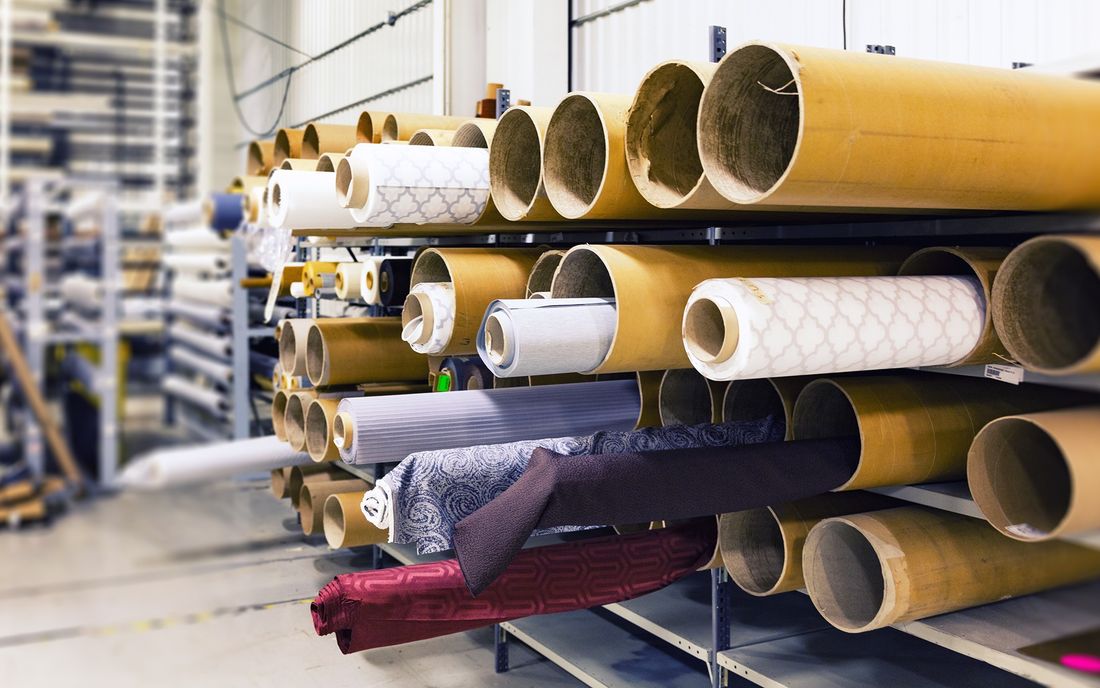
Remnants and defective rolls: how to record what is left
Cutting remnants and defective rolls often fall outside the records. Giving them their own item, zone and regular valuation makes them visible.
When cutting ends, a 14-metre piece is left on the table; a few months later dozens of small remnants of the same fabric have piled up. A stain appears in the middle of a roll and the roll is pushed into a corner with "we will look at it later". These pieces either do not appear in the records at all or sit inside the main fabric item as if they were sound stock. On count day this turns into a difference of "in the record, not on the rack", or the other way round. This article shows how to make remnants and defective rolls visible through their own item, their own zone and regular valuation.
Three separate groups
Calling everything "remnants" is not enough; the decision for each of the three groups is different:
- usable remnants: pieces long enough to be used again in a later cut, with a lower limit set by the business, for example 5 metres;
- short remnants: pieces below that limit, usually sold by weight or disposed of;
- defective rolls: rolls with a stain, yarn fault, shade variation or hole in part of their length.
The first goes back into stock, the second is disposed of, and the third is something to take up with the supplier.
A separate item and a separate zone
Open sub-codes beside the main fabric code: for example KMS-214 for sound stock, KMS-214-A for usable remnants and KMS-214-D for defective pieces. Keeping everything in one item adds sound and flawed metres together and gives the impression that "there is enough stock". Set aside a separate physical zone too, for example zone R. Stick a label on every piece showing metres, the type and place of the defect, the lot number and the date. Take remnants from the cutting table to this zone and post them the same day; a remnant left until the next day is born as "lost fabric". A separate item has another benefit: the planning team can see the usable remnants, and for a small order it can use them before opening a new roll.
Example: two small calculations
An illustrative roll: 120 metres at a unit cost of 2.50 USD, worth 120 × 2.50 = 300 USD. At goods receipt a stain is found over 18 metres, but in the record the roll is a single line and looks like 300 USD of sound stock. In a proper record the roll is split in two:
- sound part: 102 m × 2.50 = 255 USD;
- defective part: 18 m, valued at 50 per cent of cost (the rate is only an example): 18 × 2.50 × 0.50 = 22.50 USD.
The total is 255 + 22.50 = 277.50 USD, and the 22.50 USD drop in value now shows on a separate line. The calculation is similar for remnants: in one month five pieces of 14, 9, 22, 6 and 11 metres pile up; 14 + 9 + 22 + 6 + 11 = 62 metres, and 62 × 2.50 = 155 USD. If these pieces were never posted, the count shows them as an unexplained surplus of 155 USD, or as a consumption difference.
Regular review
Review remnants and defective stock once a month: the age of each piece (has it been sitting for 90 days?), its value and the decision, all in one table. The options are clear: add it to the next cutting plan, sell it by weight, write a defect claim to the supplier or dispose of it. A sale or disposal decision should be written, and the stock removed from the record with an issue slip; the storekeeper should not decide on disposal alone. Set the write-down rate together with your local accountant. A separate line for "remnants and defective stock" in the head-office report keeps this figure from being forgotten. The common mistakes are clear as well: mixing defective metres into sound stock, leaving remnants on the cutting table, and writing "about" without measuring. Small pieces look unimportant one by one, but together they add up to hundreds of metres.
In short
Once remnants and defective fabric are visible, the count variance shrinks and the loss in value reaches management on time. In factory warehouse counts StockSystem counts the raw-material, semi-finished and finished-goods areas separately, and measures unlabelled, opened or cut rolls to write the result in the unit on the item card.