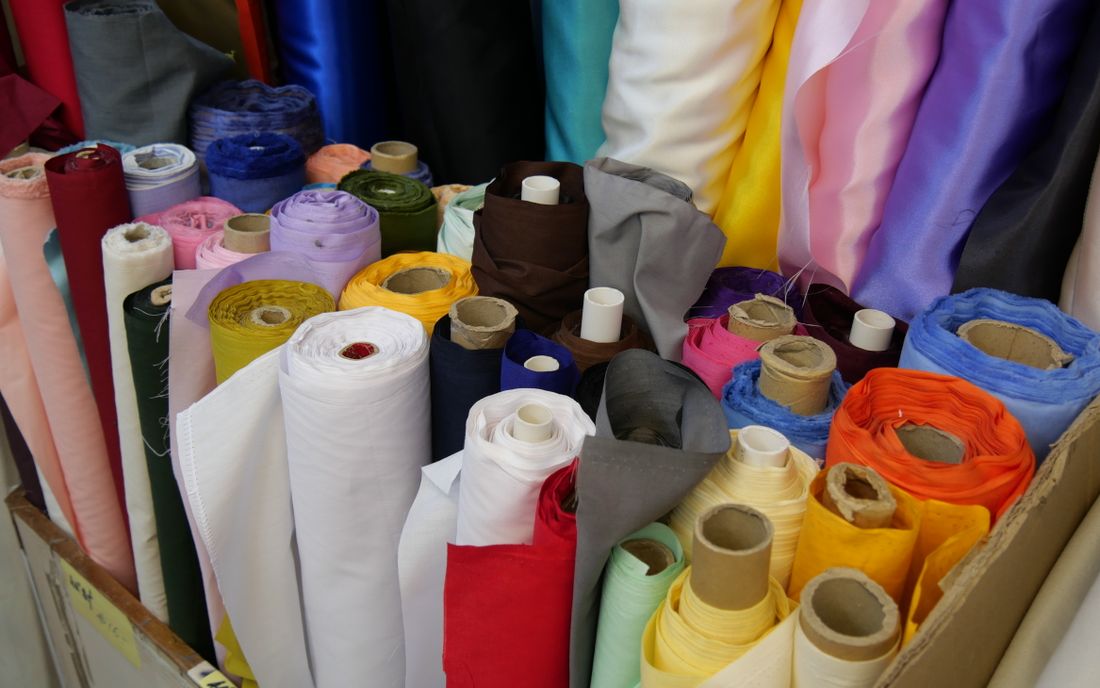
Counting fabric rolls: metres, kilograms and roll labels
The same roll shows up in metres, kilograms and rolls. How to count fabric from labels and measurements and bring the result into line with the record.
In a fabric warehouse one product lives under three numbers. The supplier's delivery note gives kilograms, the sales invoice gives metres, and the storekeeper's list says how many rolls there are. All three are right, but unless one is converted into another the count never meets the record. Part of the variances found in textile stores comes not from missing material at all, but from these three measures being mixed up. Here is the order that works when you count fabric roll by roll.
Choose one main unit first
Every fabric item needs exactly one main unit on its item card. In most businesses this is the metre; for some knitted fabrics and for yarn it may be the kilogram. The other unit is kept for information. The count result is written in the main unit, with the second unit noted beside it. Otherwise the same roll can enter the records twice, once as 120 m on one line and once as 38 kg on another.
If you must convert kilograms to metres, you need the weight per square metre and the width. The formula is simple: metres = kg × 1,000 ÷ (g/m² × width in metres). An illustrative case: a fabric of 180 g/m² and 1.60 m wide weighs about 288 g per running metre, so a 100 kg roll holds roughly 347 metres. That is only an estimate. Moisture, stretch and the weight of the cardboard core can move it by a few percent, which is why the metres printed on the label, or measured, always outrank the calculated figure.
What the label tells you
A well-made roll label shows the roll number, lot, colour code, metres and gross and net kilograms. During the count, check three things:
- Is the label legible, and does the roll number match the one in the record?
- Do the lot and colour code match the line on the item card? Two different lots can pile up under the same colour name.
- Has the roll been opened, cut or rewound? If so, the metres on the label are no longer valid.
Opened and unlabelled rolls are the riskiest group in a count. Put them on a separate list from the start.
Counting steps
- Group the rolls in a zone by lot and colour code and count each group separately.
- For intact rolls with a sound label, read the metres from the label; do not measure them again.
- Measure opened or unlabelled rolls on the measuring table, or weigh and convert them, and write the result on the back of the label with the date and a signature.
- Compare the result with the record in the main unit.
- A second team re-measures every line that falls outside tolerance.
The tolerance is the company's own decision, but it should be written down before the count. For example, a difference of up to one per cent per roll can be treated as rounding and left alone, while anything larger goes into the variance table as a line. Setting the tolerance after the count invites adjusting the number afterwards to make a difference look acceptable.
Example: 27 metres on paper
Take an illustrative case. The record shows 40 rolls of colour 214 (blue), lot P-17, 6,000 metres in total. The count finds all 40 rolls; 37 are closed and their labels say 150 metres. Three rolls have been opened, and on the measuring table they come to 138, 141 and 144 metres. The total is 37 × 150 + 423 = 5,973 metres. The difference is 27 metres, or 0.45 per cent. The figure is small, but the cause is clear: a sample was cut and no issue slip was written. The correction is made against those three rolls, and a slip rule for samples is introduced.
Note that although the line total is only 0.45 per cent, the deviation on the individual rolls is between 4 and 8 per cent, above the one per cent tolerance per roll. Differences skipped because the total looks small pile up lot after lot as long as samples are cut without a slip.
In short
Three things make a fabric count consistent: one main unit, a legible roll label and a separate measuring rule for opened rolls. In factory and warehouse counts StockSystem takes the number of rolls first, then the metres or kilograms from the label or the record card; for rolls without a label, or opened or cut ones, it measures the real quantity and writes the result in the unit on the item card.